
Key Takeaways
- AI driven hiring is a real trend, with 73% of job postings mentioning AI by 2026.
- Employers now expect AI skills across various roles, not just technical positions.
- AI driven roles integrate AI tools from the start, impacting job workflows and hiring processes.
- Filipino professionals have an advantage with high AI tool adoption, particularly in the IT-BPM sector.
- The demand for AI fluency will increase, leading to new job titles and a greater emphasis on demonstrable skills.
Your cousin just got laid off. Not because she was bad at her job, but because the company said it was “restructuring due to AI adoption.” A week later, she’s back on LinkedIn and Facebook job groups, applying to anything that looks half-decent. And there it is again, in almost every post. “AI driven,” “AI focused,” and “must be AI savvy.” The same technology that just took her job is now a requirement to get the next one.
That contradiction is happening to a lot of Filipino professionals right now, whether or not they’ve experienced it firsthand. This article breaks down what “AI driven hiring” actually means, whether it’s a real trend or just noise, how capable these AI tools actually are right now, and what all of this means for Filipino professionals job hunting today.
Is AI Driven Hiring a Real Trend?
Yes. The data supports it. In 2026, roughly 73 percent of job postings mention AI in some form. Some ask for AI tool experience. Others describe AI driven decision making. Many simply expect comfort working next to AI systems.
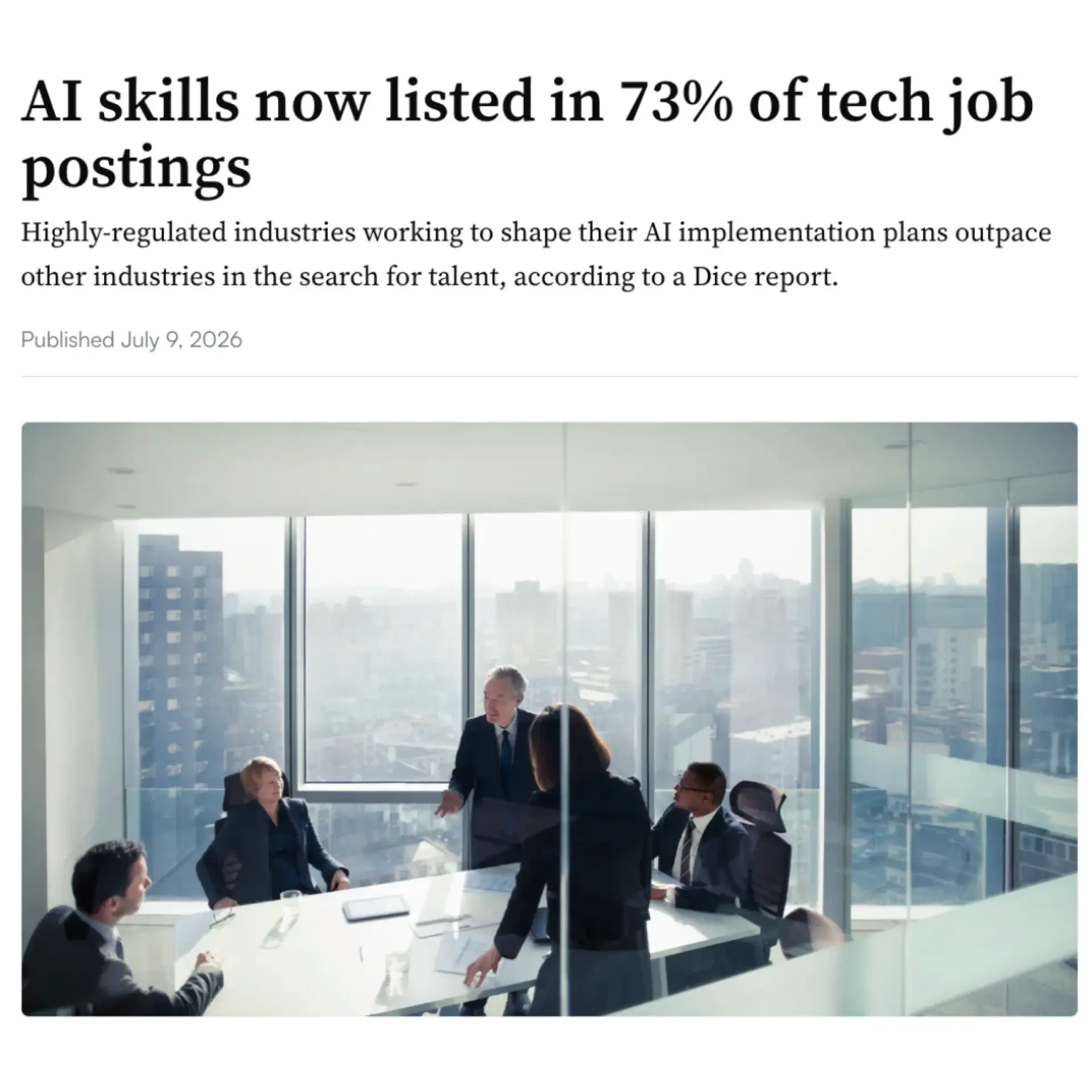
Two years ago, employers expected AI skills mainly from data scientists and engineers. Today, that expectations show up in marketing, admin work, finance, and customer service.
The number of workers in roles that require AI fluency grew sevenfold in two years. It rose from about 1 million workers in 2023 to 7 million in 2025. US job postings requiring AI skills grew 144 percent year over year as of April 2026.
These numbers tell a simple story. AI driven hiring is not a marketing phrase. It reflects a real change in what employers expect from staff.
What Does “AI Driven” Actually Mean?
An AI driven role builds AI tools into the workflow from the start, rather than adding them later. The team plans around AI from day one.
This phrase usually points to one of three things:
- The daily workflow runs on AI tools.
- Decisions get informed or sped up by AI.
- The team keeps adopting new AI tools as they appear.
In hiring specifically, this often means AI helps flag qualified candidates before a human ever gets involved. Carla Batan, Talent Acquisition Leader at Penbrothers, found that AI removes the bias of favoring a candidate who “looks great on camera and was very bubbly,” rather than weighing actual qualifications.
This kind of role is not always a technical AI job. A marketing coordinator can work in an AI driven team. So can a recruiter, a bookkeeper, or a support agent. The tools change. The core expectation stays the same.
How Long Has AI Actually Been Around?
Most people underestimate this fact. The AI tools showing up in job postings today are still very new.
Generative AI tools entered mainstream workplace use around late 2022. Tools like ChatGPT reached the public that year. Companies then spent the next few years learning how to use them.
This means the shift toward AI driven hiring has unfolded in about three years. Most new skill categories take five to ten years to become standard in job postings. AI compressed that timeline. That is why the shift feels sudden, even though it now shapes hiring at scale.
What Employers Mean by “AI Savvy”
Employers use the phrase “AI savvy” often, but it usually points to four specific things.
Working Knowledge of Relevant AI Tools
This includes writing assistants, AI analytics platforms, automation tools, and coding copilots. Employers don’t expect you to know every tool out there. They just want you to be comfortable using the ones that matter for your role, whether that’s writing, checking data, or automating simple tasks.
Judgment Over Blind Trust
Strong candidates check AI output for accuracy. They know when to rely on a tool and when to step in. AI can be fast, but it’s not always right. Employers want people who double-check the output, not people who accept it without question.
Proof of Use
Employers want a resume line, a portfolio piece, or an interview example. A skills list alone does not prove much. Anyone can say they “use AI tools.” What stands out is showing a real example, like a task you did with AI and what came out of it.
Comfort with Change
AI tools update fast. Adaptability counts as much as knowledge of any single platform. The tools you use today might change next year. Employers care more about how fast you can learn something new than how well you know one specific tool.
Some postings go further and ask for “AI native” candidates. This means AI tools already sit inside your normal workflow, not added as an afterthought. For these candidates, AI isn’t a separate step. It’s just part of how they already work.
What This Looks Like for Filipino Professionals
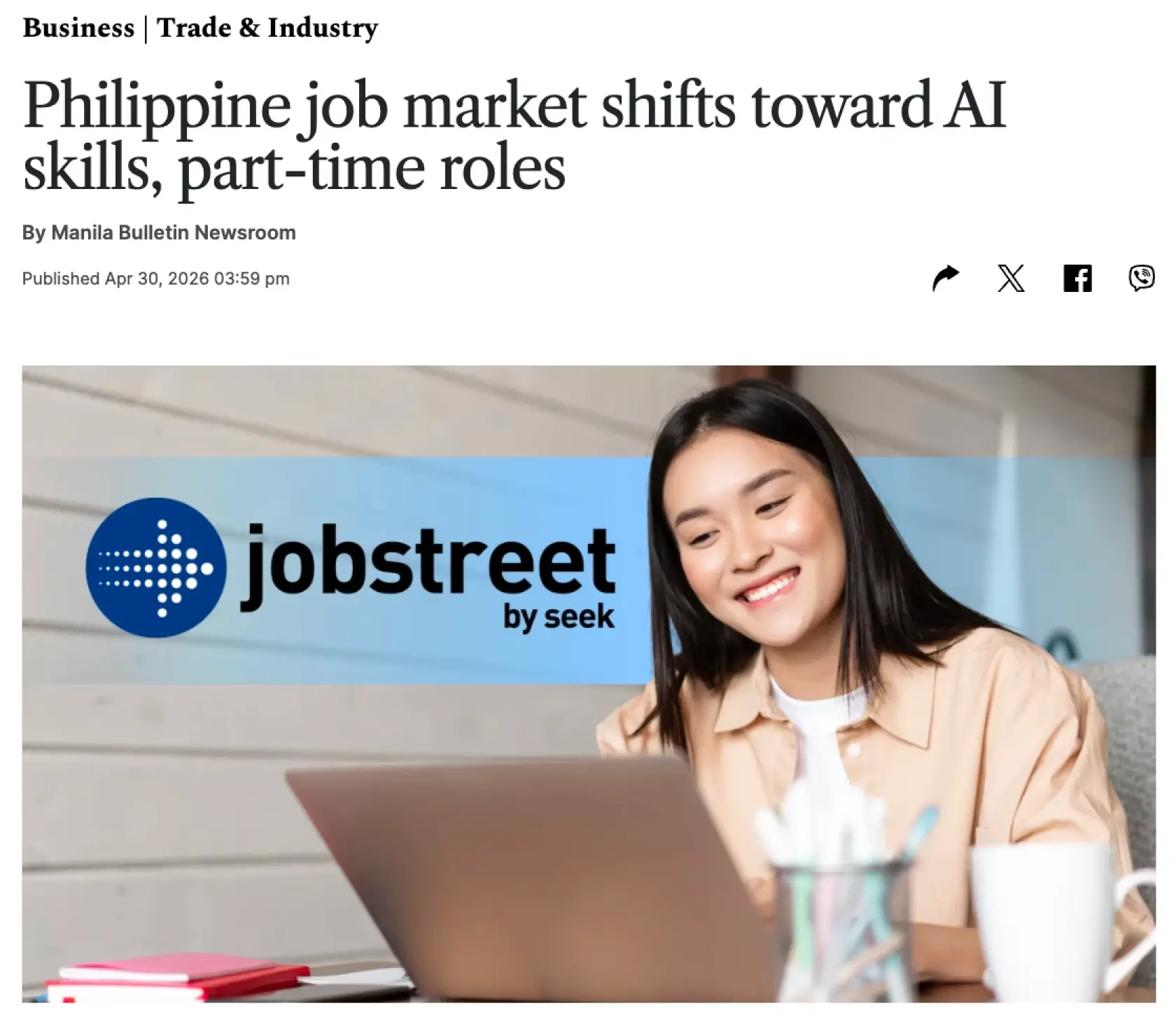
Filipino professionals hold a real advantage in this shift. About 86 percent of Filipino knowledge workers already use AI tools at work. This adoption rate ranks among the highest in the world.
The Philippines is on track for close to 1.97 million IT-BPM jobs in 2026. Analysts expect the sector to bring in near USD 42 billion in export revenue. A growing share of that work now runs through AI assisted tools.
About 67 percent of IBPAP member companies have already adopted AI technology. Most report stronger output and higher productivity, with staff levels holding steady.
Roles are shifting rather than disappearing, based on recent industry survey data. Data entry work is shifting toward data analysis. Customer service work is shifting toward AI assisted support. New roles are opening too, including AI trainers, prompt specialists, and data annotators. Many of these roles do not require a coding background.
What to Expect Going Forward
More AI Driven Language in Job Postings
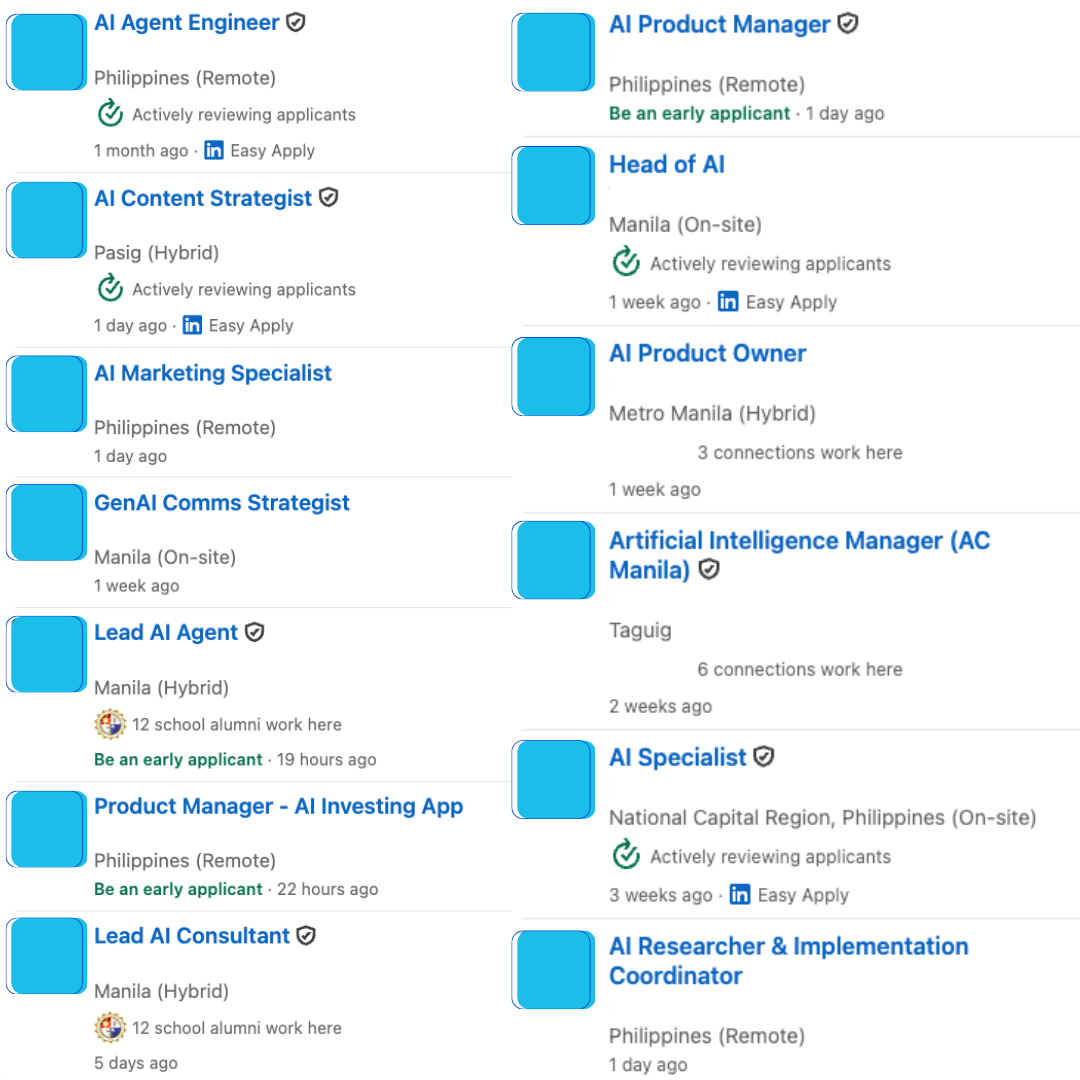
This trend is speeding up. What started as a handful of tech and data roles mentioning AI has spread into nearly every job category. Expect job titles, requirements, and even day-to-day task descriptions to reference AI tools more explicitly over the next few years, not less. Employers are no longer treating AI as a nice-to-have skill buried in the fine print. It’s moving toward the top of the listing.
AI Skills as a Baseline Expectation
Basic AI fluency is becoming as common as basic computer literacy once was. A decade ago, knowing how to use email, spreadsheets, and word processors wasn’t a differentiator. It was simply assumed. AI tools are heading in the same direction. Being able to prompt effectively, review AI-generated output, and integrate AI into daily workflows will likely stop being a “bonus skill” on a resume and start being an unstated requirement, the same way typing skills or basic software literacy already are.
A Widening Gap Between Casual AI Use and True AI Fluency
Employers now look past keywords to real, demonstrated skill. Simply listing “ChatGPT” or “AI tools” on a resume is losing its impact, because almost everyone can claim familiarity. What will set candidates apart is the ability to show how they’ve used AI to solve real problems, improve output, or save time, backed by concrete examples, portfolio pieces, or specific outcomes. The candidates who thrive won’t just be AI users. They’ll be able to prove AI judgment, knowing when to trust a tool’s output and when to override it.
New Job Titles
Expect more roles like AI trainer, prompt specialist, and AI quality reviewer, including entry-level versions. As companies embed AI deeper into their operations, entirely new job categories are emerging to support that shift. Many of these roles don’t require a technical or coding background. They call for strong communication skills, attention to detail, and the ability to evaluate whether AI output actually makes sense. This opens doors for professionals from non-technical backgrounds who are willing to build AI fluency early.
Continued Strong Demand for Filipino Talent
High AI adoption, strong English skills, and sector growth all support this demand. Filipino professionals already lead much of the world in AI tool adoption, and that, paired with strong English communication skills and a thriving IT-BPM sector, positions the Philippines well for this shift. As global companies look for talent that can adapt quickly to AI-integrated workflows, Filipino professionals are likely to remain a strong and reliable talent pool, provided they continue building demonstrable AI skills alongside their existing strengths.
Are You Ready to Take the Next Step
Curious where you’d fit into an AI driven team? Explore our open roles and see which ones match your skill set. Not sure if your salary expectations are in line with the market? Our salary guide breaks it down by role. And if you’re ready to take the next step, get in touch with our team to learn more about how we hire.
Frequently Asked Questions
No. Job posting data and workforce research both show a real, measurable shift toward AI driven roles across industries.
Mainstream workplace AI tools spread starting in late 2022, after tools like ChatGPT reached the public.
No. Many AI driven roles, including data annotation and AI assisted customer support, do not require coding skills.
Show specific examples. Name the tools you use, describe a task you completed with them, and explain the result.
Yes. Filipino knowledge workers report some of the highest AI adoption rates in the world, based on recent workforce data.