
Key Takeaways
- Many Filipino workers feel stuck despite raises, mainly due to inflation and stagnant job growth.
- Switching careers requires careful consideration; evaluate reasons for feeling stuck before making a move.
- Pursue small career shifts that leverage existing skills and experience for better pay opportunities.
- Consider remote or foreign companies for potentially higher salaries, but weigh benefits and taxes involved.
- Before committing to a new career, test the waters with small projects or courses in the desired field.
So you got your raise this year, and somehow your wallet still feels thinner. And your role looks pretty much the same as it did three years ago.
If you’re thinking about leaving your industry, you’re far from the only one. Around eight in 10 Filipino workers wanted a career change in the first half of this year. Most of them actually like their jobs, yet they feel stuck in place.
Wanting out is easy, and leaving without hurting yourself is the harder part. So let’s talk it through, starting with why your pay feels stuck.
Why Your Salary Increase Doesn’t Feel Like a Raise
First, you’re not imagining it, and company budget timing explains a lot. Most companies planned this year’s raises back in mid-2025, when prices still looked calm. The typical planned increase came out to around 5.5%, same as back in 2024.
Then prices shot up, hitting 7.2% inflation in April. Things cooled a bit since, but inflation still averaged 5.2% from January to August. So if you got a 5% raise, you basically broke even.
And if you commute, you felt it more, since transport costs jumped 13.5% in August. Some companies skipped salary reviews, and nearly half cut their pay budgets for 2026.
One annoying catch, though, is that switching industries won’t magically fix your pay. Most sectors planned similar raises, and even IT and finance only expect around 6%.
Should You Resign Without a Job Lined Up in 2026?
I know the dream is handing in your resignation letter on Monday morning. But the job market is tougher than it’s been in about four years. Unemployment hit 6% in July, which means 3.14 million Filipinos were out there job hunting.
On top of that, another 6.33 million workers want more hours or a new job. And fresh graduates keep coming, with 1.33 million young Filipinos joining the hunt in July. That’s a lot of people applying for the same openings you’re eyeing.
There’s one more thing people often realize only when it’s already too late. SSS unemployment benefits only kick in if you lose your job, like through retrenchment. If you resign on your own, you get zero, so your savings carry you.
Figure Out What’s Actually Keeping You Stuck
Before you sign up for a course or blast your resume everywhere, pause for a second. Feeling stuck comes from four different problems, and each one has a different fix. See which row sounds the most like you right now.
| If this sounds like you | What’s probably wrong | Try this first |
| You dread the hours, the commute, and the lost sleep | Burnout or your work setup | A remote or hybrid role with less commuting |
| Friends in your role earn more at other companies | Your employer | Ask for a raise, or move to a better-paying company |
| Raises look small everywhere, and AI is eating your tasks | Your role or industry | A nearby role in a growing field |
| Your skills are solid, but local pay only goes so high | Who pays you | The same work for a foreign company or offshore team |
A lot of people land in that first row without realizing it. For many Filipino workers, poor work-life balance burns them out more than low pay does. Think headaches, body pain, and lying awake at night still thinking about work. If that’s you, a new industry with the same hours will leave you just as tired.
And if you’re in the second row, try asking for a raise before you walk. More Filipinos are negotiating now, and success rates nearly tripled from 8% to 23%. Plenty of people stayed because they simply asked and got what they wanted.
Make a Small Career Shift That Solves Your Problem
Once you know what’s wrong, ask how far you really need to move. I picture it as a ladder, where each step down carries a bit more risk.
- Same role with a better-paying employer, such as an accountant joining a foreign firm.
- Same role in a new industry, such as a recruiter moving from retail to tech.
- A new role in your current industry, such as a CSR moving into quality assurance.
- A new role in a new industry, which means starting close to entry level.
That last step sounds exciting, and I get it, but it’s risky this year. AI now does a lot of the simple tasks that newbies used to learn on. In the US, jobs for young software developers have dropped by nearly 20% since 2022.
Meanwhile, workers in their late 30s and 40s in those same jobs actually grew in number. So your experience protects you, which is why your next move should use it. Before you pay for a coding bootcamp, ask if a smaller step would work.
And if you’re in BPO, I know the AI headlines can feel pretty scary. The industry should still grow to about 1.96 million workers by year-end. But it did lower its 2028 targets, and AI played a part in that.
Go for roles where AI makes you faster
Here’s a simple filter for picking your target role. Jobs where AI does the whole task lost young workers, while jobs where AI helps people grew. So lean toward work that runs on judgment, client relationships, and reviewing other people’s output.
Worried you’re too old for a career shift?
If you’re over 30 and worried about age, the law is on your side. Republic Act 10911 makes it illegal for employers to reject you because of your age. Still, some employers quietly prefer younger hires, so lead with what your experience achieved.
What a Real Career Shift Looks Like
Our own Sierra Trance shows how a shift can build on what you already know. She studied nursing, spent five years at a local bank, then joined a startup. There, she handled recruitment and payroll, then grew into the Operations Manager role.
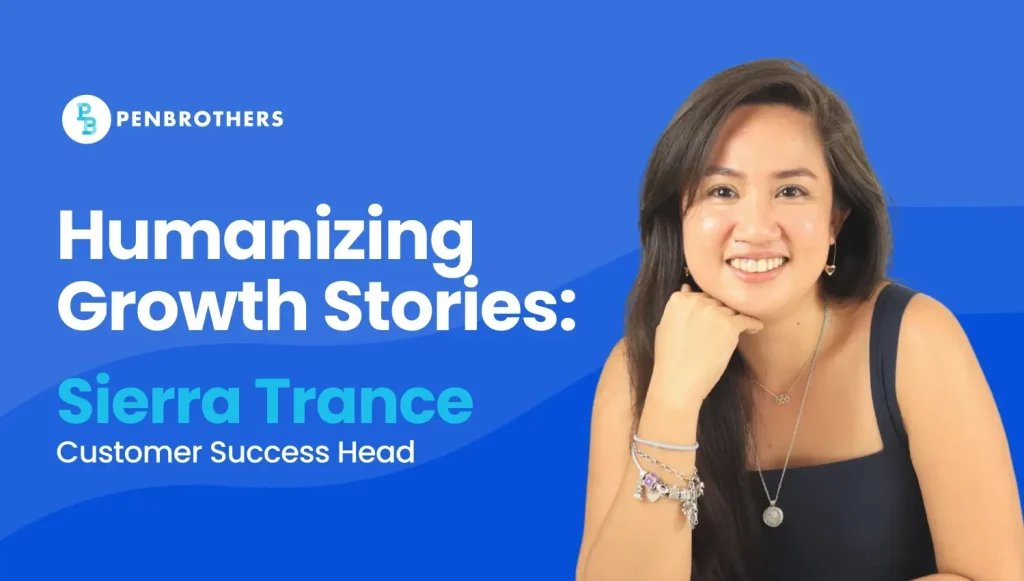
Then the pandemic hit, and the startup let her go after six years. Penbrothers already knew her work, so we offered her a role in Customer Success. She now leads that team as our Head of Customer Success.
What I love about her story is how much nursing still shows up. She says customer success runs on the same things nursing did: empathy, listening, and honest talk. Her past came with her into a brand-new field, and it became her edge.
One big test came when we sent her to the US to meet a client.
“I overcame this big challenge because I believed in myself, and I got the support of Penbrothers’ leaders.”
Sierra Trance, Head of Customer Success
Working for a Foreign Company Might Be Your Shortcut
For a lot of people, the real fix is doing the same work elsewhere. Local pay scales only go so high, while many foreign companies pay in dollars. Accounting shows this well, because firms here and abroad fight over the same people.
Enrollment in accounting courses here dropped 41% between 2019 and 2023. Meanwhile, US firms keep hiring offshore because they can’t find enough accountants at home. So if you know your debits from your credits, you have more options than you think.
Quick heads-up, though, since you’ll see posts claiming remote work pays 10 times more. For junior and mid-level roles, it’s usually closer to one and a half or two times. The bigger jumps go to senior specialists, so check our salary guide for your role.
Compare how you’d actually get hired
There are a few ways to work for a foreign company, and they differ a lot. Before you say yes, weigh the benefits and taxes along with the paycheck.
| Path | Pay | Benefits and protection | Watch out for |
| Freelancing | Swings a lot by client | You pay your own SSS, PhilHealth, and HMO | Irregular income, scams, and BIR paperwork |
| Direct contract with a foreign company | Often above local rates | Usually none unless you negotiate | Little protection if the contract ends |
| Offshore staffing or EOR | Above local rates for many roles | Philippine labor protections and government benefits | Depends on the provider you pick |
| Local BPO | Steady but modest | Full local benefits | AI pressure on routine work |
Freelancing also comes with tax homework that catches first-timers off guard. You’ll need to register with the BIR and file quarterly and annual returns. If you earn under ₱3 million a year, you can usually choose an 8% flat rate.
We wrote a whole guide on legit work-from-home jobs if you want more detail. You can also see how offshore staffing works from the employee’s side.
Save Up Before You Make the Jump
Okay, let’s talk money, because a career shift without savings gets stressful fast. Start by adding up your monthly bills, including rent, loans, and what you send home. Then multiply that by how many months your job hunt could take.
With jobs this tight, I’d plan for a longer search than last time. And when an offer comes in, look past the salary number for a minute. A 15% raise that takes away your HMO and 13th-month pay might leave you even.
Try the New Career Before You Commit
A lot of us think we need to find our passion before moving. In real life, you figure out what you want after you start trying things. People who switch careers well test a few versions of themselves first.
And you can do all of this while your current job pays the bills.
- Take on one small paid project in the field you want, even if it pays little.
- Grab coffee with three people who already do the job you’re curious about.
- Finish one free course, like a TESDA online module, and apply it right away.
- Write two sentences that explain how your old job connects to the new one.
Each little test tells you something real, which beats guessing when your family counts on you. Plus, those two sentences become your answer to “why the switch?” in interviews.
Watch Out for Scams and Other Career Shift Traps
When you’re desperate to get out, scammers can smell it from a mile away.
Task scams usually start with a friendly message on Viber, Messenger, or Telegram. In August 2026, a mom lost ₱43,700 after scammers first paid her small rewards.
So keep these traps in mind while you plan your next move:
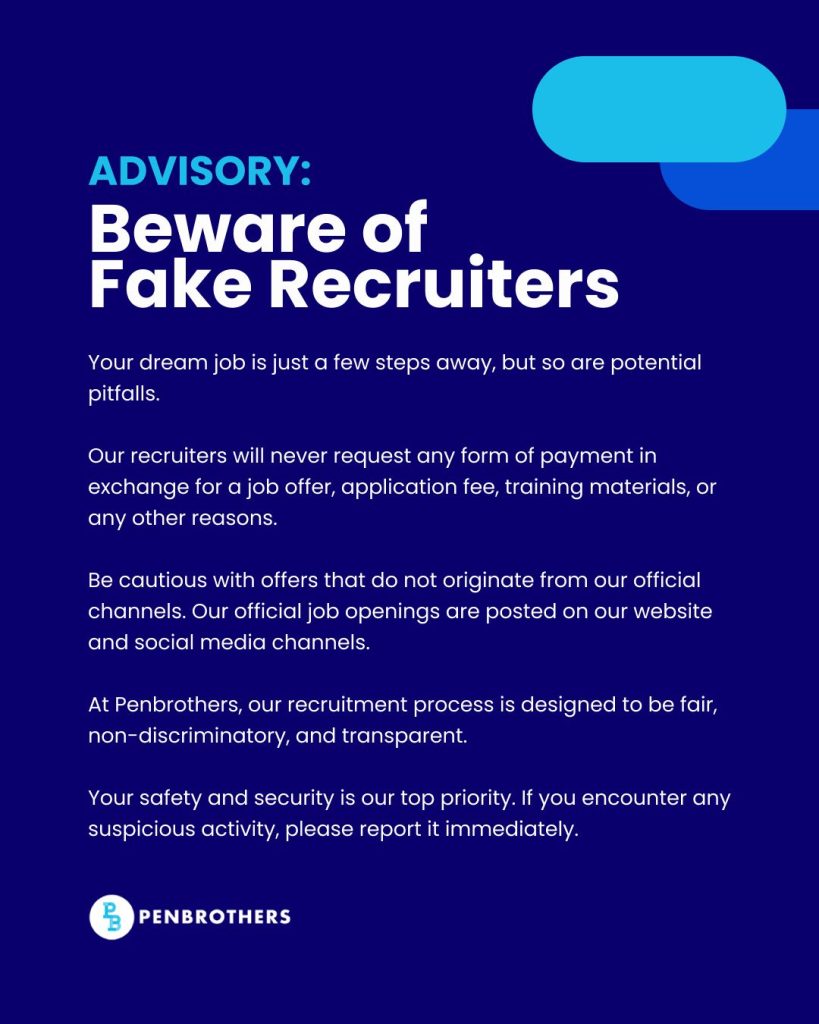
- If a job asks you to pay a fee or deposit first, walk away.
- If they skip the interview and won’t do a video call, treat that as a red flag.
- Skip pricey courses that promise jobs, since real employers don’t charge you to apply.
- Don’t hoard certificates without a target role, because employers want to see real work.
- Don’t quit to start a business just to escape burnout, and test it on weekends.
And before you send any IDs, look the company up on the SEC or DTI websites.
Your Next Step Can Be Small
You don’t have to quit this month to start your career shift. Figure out why you’re stuck, pick a small move that fixes it, and test it.
If your skills could work for an international team, take a look at our open roles. We match Filipino professionals with companies abroad, and you still keep full local benefits.
Frequently Asked Questions
It can be, as long as you have a plan and some savings. Jobs are harder to find now, so line up your next role before you resign.
Definitely, especially if your next move uses the experience you’ve already built. Experienced workers have held up better than new grads in jobs that AI touches.
Sadly, no, since SSS only pays that benefit when you lose your job involuntarily. Even then, you get half your average monthly salary credit for two months.
It really depends on your role and how senior you are. Junior roles usually see a modest bump, while senior specialists tend to see bigger jumps.
They’re a cheap way to learn, but employers also want to see real work. So pair each course with a small project you can actually show someone.