
Key Takeaways
- Filipino IT professionals are in demand as global companies struggle to find qualified tech talent locally.
- Remote IT jobs offer better pay and benefits, making them attractive for developers, support specialists, and analysts in the Philippines.
- Key roles in demand include software developers, IT support specialists, web developers, cybersecurity analysts, and data analysts.
- Effective communication, adaptability, and ownership are vital for career advancement in remote IT jobs.
- Employers of Record like Penbrothers provide a clear career path and full benefits, making remote work more stable and sustainable.
Something interesting is happening in tech right now, and Filipino IT professionals are in a really good spot to take advantage of it.
Companies in the US, Europe, and Australia are running into a wall. They cannot find enough qualified developers, analysts, and support engineers at home, and the ones they do find are expensive and hard to keep. So they are looking outward. A lot of them are looking here.
That means more remote IT work, better pay, and more legit, full-time roles with global teams without leaving the Philippines. If you are a developer, a support specialist, an analyst, or anyone in tech, this is worth paying attention to.
Why Companies Are Choosing Filipino IT Talent
It helps to know why this is happening. Once you understand what global companies are actually looking for, you can position yourself a lot better when you apply, when you negotiate, and when you push for that next step in your career.
The talent pool here is genuinely strong. The Philippine IT-BPM industry hit USD 38 billion in revenue and 1.82 million jobs in 2024. That is a lot of trained, experienced people working with global clients every day. The country also ranked No. 28 globally in EF’s 2025 English Proficiency Index, which means communication is rarely the bottleneck.
Cultural fit is real, not a marketing line. Filipino professionals tend to be easy to work with. We adapt fast, we care about the work, and we are already used to Western workplace norms. The point a lot of global companies are making lately is that you do not hire here just because it is cheap. You hire because Filipino talent genuinely strengthens your team.
The pay is fair, on both sides. Companies save 60 to 70 percent compared to hiring locally, and you earn international-level pay with full Philippine benefits attached. Through an Employer of Record like Penbrothers, you get the global pay scale plus SSS, PhilHealth, Pag-IBIG, 13th-month pay, HMO, and everything else the Telecommuting Act (RA 11165) protects.
Time zone stuff is more flexible than people think. Some roles want overlap with US hours, some want EU hours, some are async-first. There is a setup that fits almost anyone.
You can actually grow in these roles. The good ones are not just “log in, do your tickets, log off.” They come with mentorship, training, and a path forward. The companies worth working for treat growth as part of your everyday life, through learning, mentoring, and real career opportunities, not as something you have to fight for.
Top 5 Remote IT Work Roles Filipino Professionals Can Land
Here are five roles that companies are hiring for right now, plus what you actually need to do well in them.
1. Software Developer
If you write code for a living, you already know this is one of the biggest categories. Filipino developers get hired across the stack, with strong demand for Python, Java, JavaScript, PHP, React, Node.js, and Laravel.
But here is the part nobody tells you early enough. Writing good code is the floor, not the ceiling. The developers who get promoted are the ones who can explain why they made a technical decision, push back on a bad spec without being a jerk, and write a Slack message a tired PM can actually understand at 9 PM their time. LinkedIn’s analysis of in-demand skills ranks communication at the top. That is not a coincidence.
Backend, frontend, full-stack, mobile. All of it is hiring.
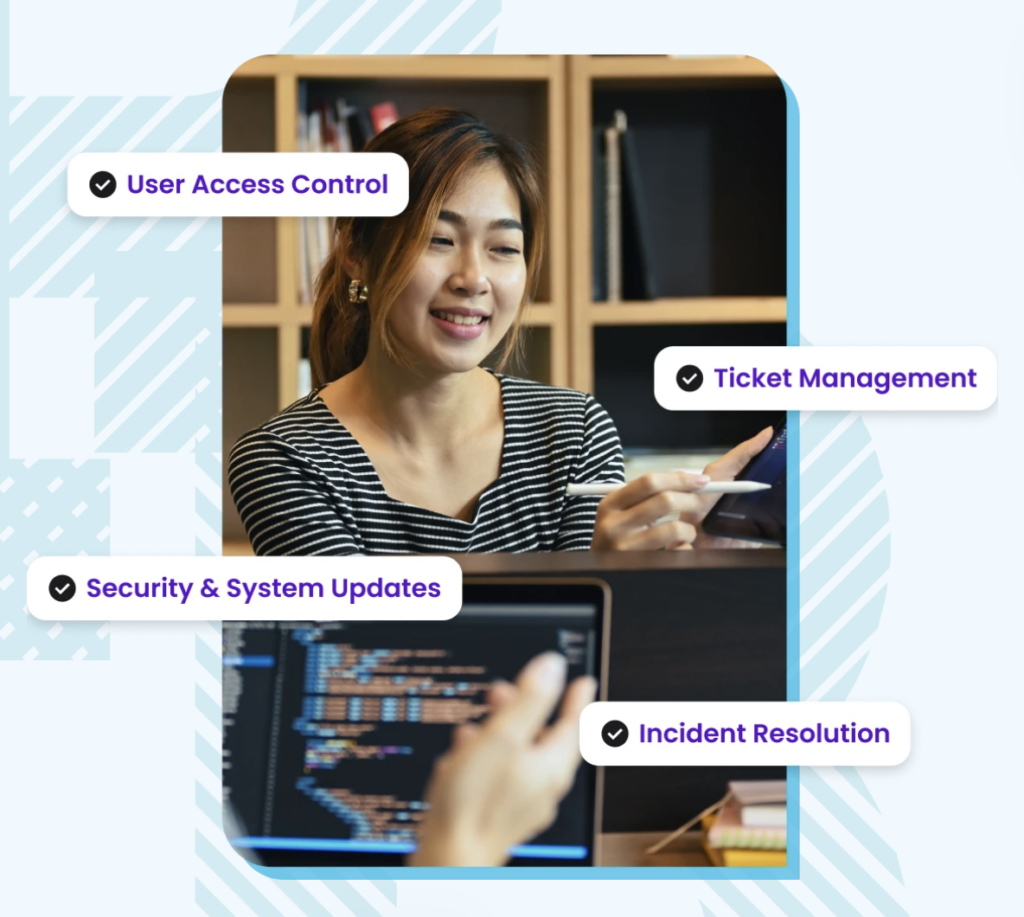
2. IT Support Specialist
Every company that runs on tech needs someone making sure the tech actually works. That is you.
The trick with this role is that the technical part is honestly the easier half. The harder half is staying calm when someone is panicking because their screen froze five minutes before a board meeting. Companies hire for patience and clear communication just as hard as they hire for troubleshooting skills.
The role covers help desk, system admin, network admin, and technical support engineering. Most of it can be fully remote with a decent home setup.
3. Web Developer
Web developers build the sites and web apps that businesses make money on. That is your e-commerce checkout, your booking flow, your marketing site. If something is off, the business feels it immediately.
In the Philippines, a lot of web dev work happens around WordPress, Shopify, Webflow, and headless CMS setups. What clients really want here is someone who notices the small stuff. Spacing that is slightly off, a button that lags, a form that asks for too much. Caring about that is what separates a developer from a developer who keeps getting referred to new clients.
4. Cybersecurity Analyst
This one is growing fast, and the salaries reflect it.
According to IBM’s latest report, the average cost of a single data breach has reached an all-time high of $4.45 million. Once a number gets that big, every company starts taking security seriously. Even those who used to ignore it.
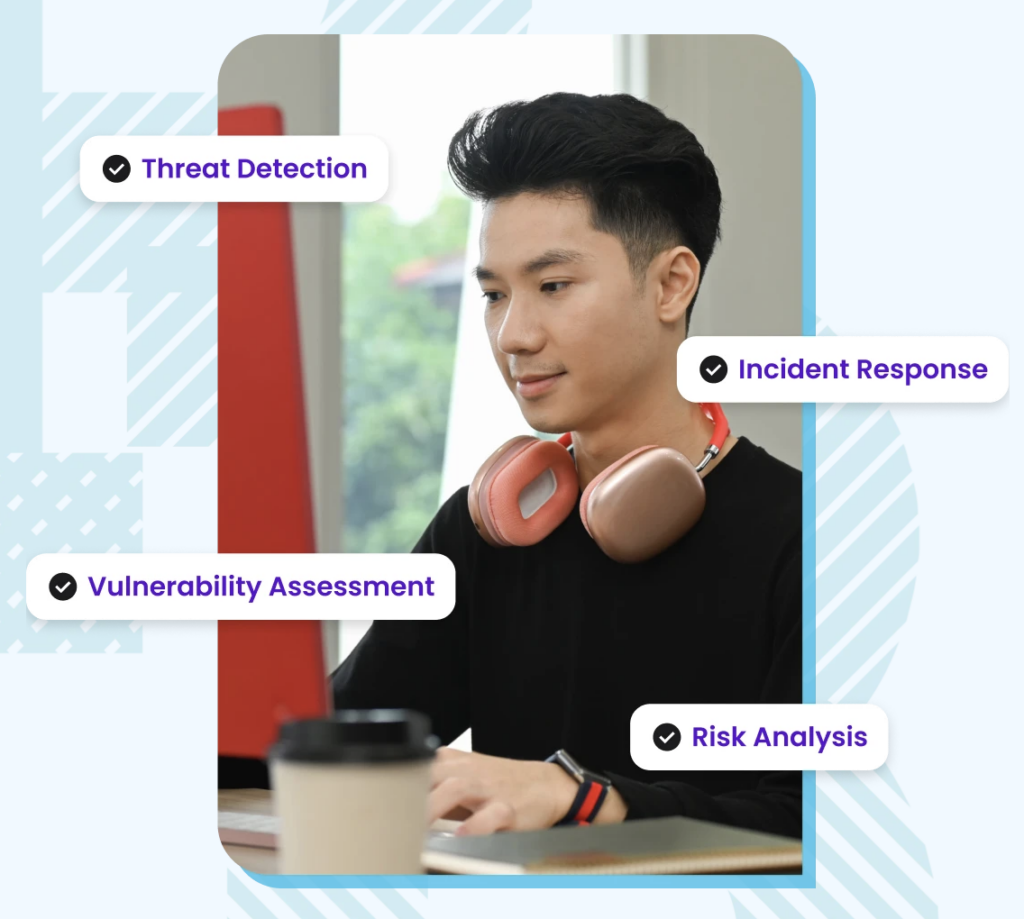
Filipino cybersecurity analysts get hired for SIEM monitoring, threat detection, vulnerability assessment, penetration testing, and compliance work. Penbrothers, for example, regularly hires for Information Security Engineer roles that ask for CISSP, OSCP, or GIAC certifications.
If you have an IT background and you have been thinking about specializing, this is a smart bet.
5. Data Analyst
Companies are drowning in data, and most of them have no idea what to do with it. That is why data analysts are everywhere on hiring boards.
The tools you will see most often are SQL, Python, R, Power BI, and Tableau, with more and more clients now wanting people who are comfortable with AI and machine learning tools too.
What separates a great analyst from an average one is honestly less about tools and more about the questions you ask. The best analysts I have seen are the ones who push back when a stakeholder asks for a chart that will not actually answer their question, and who can explain a finding to someone who has never opened a spreadsheet in their life.
Data engineering, BI, and ML roles are all growing alongside this if you want to go deeper.
What Will Actually Get You Promoted
Tools and certs get you in the door. What happens next is mostly about how you work.
There are a handful of habits that tend to show up in the people who keep getting promoted in remote IT work. None of them is surprising, but most people underrate how much they matter.
Communication. Tight Slack messages. Clean documentation. Stand-ups that actually move things forward. If your manager has to chase you for context, you are losing points.
Adaptability. Tools change. Clients change. Priorities change. People who get rattled by that struggle. People who shrug and figure it out get the next opportunity.
Ownership. When something is yours, finish it. Flag risks early, ask for help when you need it, and do not wait to be pinged for a status update.
Curiosity. This field moves. The people who stop learning get left behind, and it usually happens quietly over a year or two before they notice.
Collaboration. Working remotely with people you have never met in person is a real skill. The good news is that most Filipino pros are already pretty good at it. The better news is you can get a lot better with intention.
If you want a deeper read on this, there is a solid breakdown of the soft skills that get Filipino professionals promoted, worth bookmarking.
Building a Remote IT Career That Lasts
Quick reality check. Landing a remote job and building a remote career are two different things.
Freelancing is a fine way in. A lot of people start there. The thing most freelancers eventually figure out, though, is that the same flexibility that drew them in starts to feel like instability after a few years. No benefits, no safety net, no clear path up. There is a longer take on this trade-off if you want to read more, but the short version is that freelancing works as a starting point, not a finish line.
Full-time remote work through an Employer of Record fixes a lot of that. You get global pay, you keep all your Philippine benefits, and you do not have to chase invoices or scramble when a client ghosts you. SSS, PhilHealth, Pag-IBIG, 13th-month, HMO, paid leave, all baked in.
That is the setup that lets you stop worrying about where your next paycheck is coming from and start thinking about where your next promotion is coming from.
Ready for Remote IT Work That Goes Somewhere?
Remote IT work in the Philippines has grown a lot in the last few years. It is not just freelance gigs and night-shift call center work anymore. There are real, full-time, well-paid roles with global companies that want to invest in you long-term.
If you are a software developer, IT support specialist, web developer, cybersecurity analyst, or data analyst, take a look at what is open at Penbrothers Careers, or follow Penbrothers on LinkedIn, Facebook, and YouTube for new roles, employee stories, and honest takes on remote work in the Philippines.
You can build a serious tech career here. You just need the right door to walk through.
Frequently Asked Questions
Cybersecurity analysts and senior software developers usually top the list, especially with certs like CISSP, OSCP, or AWS. Data engineers and full-stack developers are close behind. International roles typically pay three to ten times more than equivalent local jobs, and the bigger jumps come once you specialize. Picking a niche and going deep almost always beats staying a generalist.
Be picky about where you look. LinkedIn, JobStreet, and Kalibrr have real listings, but also a lot of noise. Platforms that hire through an Employer of Record setup tend to be safer because you are legally employed, not paid per project. Watch for red flags like vague job descriptions, upfront fees, or offers that skip a real contract. No proper employment setup, no deal.
Depends on the role. For software and web development, your portfolio and GitHub matter way more than any cert. For cybersecurity, certs carry real weight. CISSP, OSCP, GIAC, and CompTIA Security+ open doors that experience alone often cannot. For data roles, knowing your tools well usually beats a cert, though Google Data Analytics or AWS can help while you are still building experience.
Freelancing means you are your own business. You handle your taxes, your benefits, your client hunting, and you eat the loss when a client ghosts you. An Employer of Record like Penbrothers gives you international-level pay plus full Philippine protections (SSS, PhilHealth, Pag-IBIG, 13th-month, HMO, paid leave) and adds HR support and a real career path. For long-term tech careers, the EOR route is just more sustainable.